
Know TMJ Headache: Introduction, Disorders, Symptoms, Causes, Types, Treatment & Prevention
- tmj headache, tmjheadachesymptoms, tmjheadachecauses, tmhheadachedisorders, tmjheadachetypes, tmjheadachetreatment, tmjheadacherelief, tmjheadacheprevention ,
- Admin,
Introduction to TMJ Headaches
What is a TMJ headache?
The temporomandibular joint (TMJ) is one of the most important joints in the body, located on both sides of the face. It connects your jaw to your skull, and it helps you open your mouth, speak, and chew food. So, without a properly functioning temporomandibular joint, you would not be able to enjoy your daily meals or speak flawlessly with your nearest and dearest.
While jaw disorders can affect these functionalities, they can also cause headaches. So, if you are experiencing such events repetitively, you should not assume the cause of these events on your own. If this joint is malfunctioning, you will experience pain across both your head and face.
The TMJ is one of the most complex and frequently used joints in the body. One of its parts acts like a hinge, whereas the other lets your bones slide past each other. These are the parts between which there lies a disk formed of a strong and flexible tissue medically known as cartilage. Your jaw joints will function normally and open smoothly if this cartilage, a shock absorber, is actively working.
You experience a temporomandibular disorder (TMD) when this disk moves away from its place and gets ripped; your temporomandibular joints fuse together for some reason. Any problems with your temporomandibular joint can cause noticeable health changes in your body, including headaches. Headaches happen when you unknowingly grind your teeth while you are sleeping at night.
TMJ disorders: An overview and connection to headaches
You might be thinking, " What is this temporomandibular joint? Well, it is a sliding hinge connecting your jawbone to the skull. TMJ disorders, also popularly known as TMD, can cause pain on either side of your jaw. One with TMD symptoms can experience pain both in the jaw joint and the muscles surrounding the joint, controlling the jaw movement.
If you are wondering what leads to TMJD, you can look for certain contributing factors. Possible reasons include teeth grinding, particularly at night, nail biting, stress, and, not least, gum chewing. Painful health conditions that occur due to disorders in the jaw joints include osteoarthritis and fibromyalgia, among others.
You should not worry much if you are someone who experiences pain or discomfort related to this disorder for a short span of time. That said, you can utilise some home remedies to get rid of temporary discomfort. Use of a mouth guard, self-paced home care, and physical therapy can work wonders if the discomfort or pain is temporary. However, if home remedies and physical therapy do not improve the condition, you should immediately go for treatments and surgeries.
TMJ Headaches and their symptoms
Common symptoms of jaw headaches
You might be thinking about how to differentiate a headache due to disorders in jaw joints from any other headache to decide whether to adopt self-managed home remedies or consult a TMJ doctor in Kolkata if they fail to give a result. You shouldn’t worry, as there are some common symptoms to identify whether you are experiencing a headache caused by TMD:
- You may experience noticeable pain in parts of your face or head.
- You experience more pain when you chew hard food or make long and stressful use of your jaw.
- You feel trouble opening your mouth as you normally do.
- You hear a grating or clicking sound the moment you make your jaw move.
- You notice some unusual fitting issues between your upper and lower teeth.
- You hear a sound like ringing in your ears.
- Dizziness
- Sensitive teeth, especially if it is not due to typical oral health conditions like gum disease
TMJ headache locations: temple, top of head, back of head, one side
If you are feeling pain in your jaw and cheeks, behind your eyes, sides of your forehead, in your shoulders, upper back, and neck, and around your ears, it is jaw pain headaches. You may first feel pain in your jaw, but it can later radiate to your eyes, face, and temples.
TMJ headache and associated conditions (e.g., neck pain, sinus issues, eye pain)
Scientists claim that 85% of people with temporomandibular joint dysfunction also experience chronic pain alongside non-pain conditions in other body parts, as per TMJA. This is a condition called ‘comorbid’ when these conditions co-exist. TMJ disorders can co-exist with behavioural, environmental, hypertension, and sex-related factors. Nevertheless, there are other conditions that co-exist. These are:
- Asthma
- Endometriosis
- Fibromyalgia
- Back, neck, and joint pain
- Heart disease
- Neural/sensory conditions
- Sinusitis
- Tinnitus
- Vertigo
- Sleep disorders like longer sleep latency
- Eye strain, etc.
TMJ Doctors may also diagnose all these conditions if they rule out the known causes of headaches caused by TMD.
How TMJ Causes Headaches
The link between TMJ disorders and headaches
Chronic headaches are difficult to treat since they may have more than one known cause. You should not mistake associating recurring headaches with sinus or neurological-related issues. You might take it by surprise that a dental issue can also contribute to TMJ disorders. Indeed, if the issue lies in the temporomandibular joint and gets inflamed, it can produce symptoms such as headaches.
You should know that one of the frequently ignored symptoms of TMD is a chronic headache. In fact, the temporomandibular joint connects with several other parts of the neck and headache through the sharing of muscles and nerves. Any misalignment in the joint area can cause pain in the forehead and temples, and behind the eyes. Moreover, TMD-bound headaches often feel like ear-specific pressure, migraine-type symptoms, and tension headaches. Not only that, if you notice symptoms like clicking sounds, facial tenderness, jaw stiffness, pain with chewing, talking, and cheeks, and frequent tension in the neck and back areas, along with repetitive headaches, it is time you must consult a tmj dentist expertise in treating TMJ disorders.
Can TMJ cause headaches every day?
TMJ-related troubles can worry even the most intellectual brains in the world. It feels like originating from nowhere and is part of the most misunderstood and unexplained jaw pains. The inflammation that TMJ causes can make headaches unstoppable throughout the day. If you have a habit of bruxism, it can destroy your muscle fibres and will likely result in splitting headaches. If you are among people who maintain wrong postures, particularly during long sessions of screen time on television and mobile devices, you may experience such problems becoming worse.
You should keep in mind that any misalignment in the mandibular joint can cause the surrounding muscles to work more, causing more headaches. That said, some TMJ disorders may improve with self-care, while persistent cases may require professional treatment. It is only when you opt for the right treatment and do consider extensive changes in your lifestyle habits that you can expect to be cured soon. You will continue experiencing headaches every day if bruxism is not diagnosed early and if your neck and shoulder tensions remain unattended.
Does TMJ headache worsen with physical activity?
Temporomandibular disorder headaches can worsen if you do routine physical activity. While exercises are not a direct contributor, they can still cause pain both in and around the mandibular joint. It is because:
- Maintaining improper form during some exercises, such as sit-ups, and constant wrong postures at the time of running can strain both your jaw and neck muscles, resulting in pain both in and around the jaw area.
- If you are someone who grinds their teeth or clenches their jaw while doing hard work, such as lifting heavy weights, you can experience a severe level of tension in and around your jaw region.
Types of TMJ-Related Headaches
1. TMJ Tension Headaches
While jaw headaches and tension headaches are two different things, it is difficult to differentiate between the two conditions. A recurring headache may not necessarily mean that the issue is in your head; in fact, it can be your jaw. When you misinterpret TMD as tension headaches, you are moving away from its root causes. Headaches due to TMJ are often misunderstood as neck tension and migraines. However, if you notice something like jaw clicks, especially when you yawn or chew, it is jaw-related headaches and not any tension headaches. We have all experienced occasional headaches due to bad sleep or hard work. However, if you notice clicking sounds and jaw discomfort persistently, it’s different than occasional headaches.
2. TMJ Sinus Headaches
If you experience persistent sinus headaches without any signs of improvement, you should know this is something else. You may be experiencing temporomandibular joint disorders. It causes several sinus-type symptoms. If you fail to differentiate a sinus headache from a TMJ, you might end up opting for inappropriate treatment. Instead, only you are able to understand the two different conditions perfectly, and you can take the proper treatment approach.
Since the temporomandibular joint exists close to the sinus area, it is easy to get confused between TMJ disorders and sinuses. The confusion increases even more when the jaw pain radiates to the cheeks and forehead, and around the eye area. These are regions generally linked with a sinus headache. Well, the confusion does not end here, as when you experience muscle tension in the face and jaw regions, you start feeling pressure. This is also commonly mistaken for sinus congestion. Moreover, inflammation due to pain in the jaw joints can aggravate symptoms related to the sinus, increasing confusion even further.
Good news: Despite all this confusion, you can still differentiate the two by observing symptoms carefully. The first key thing to note is the location of pain. Sinus headaches cause you to feel pain in your forehead and cheeks, and around the eyes. On the other hand, jaw pain is often felt near the jaw region, the ears, and the temples.
You can also identify which is which by taking into account your jaw movement. If you notice clicking sounds along with pain in your mouth, it is not sinus headaches but likely a temporomandibular joint dysfunction.
Well, if you are still unsure which is which, do not worry, and rather, look for other symptoms. Take a deep breath and see if the headache also produces any nasal congestion or postnasal drip. If you have these symptoms, you are experiencing sinus headaches instead of jaw joint pain.
3. Cluster Headaches and TMJ
While cluster headaches are less common than tension headaches, they can be extremely intolerable. When you notice sudden and severe pain, both in or around the eye, it is a cluster headache. While an exact connection to TMJ disorders is still largely unknown, some patients with TMJ dysfunction have complained of cluster headaches. In fact, cluster headache is one of the headache types usually associated with TMJ dysfunction. If you also experience this, you might have noticed severe pain in your eyes.
Cluster headaches can continue for some weeks or even months. If it stops, it never returns for weeks or months. You should know that men are at a higher risk of experiencing cluster headaches compared to women. While this can occur at any age level, it mainly occurs during adolescence and middle age.
You should identify whether you are experiencing cluster headaches by checking some symptoms. If you see redness in your eye or feel sensitive to light, these are some symptoms of cluster headaches. By identifying these symptoms early, you can opt for relevant treatments.
4. Chronic TMJ Headaches
Temporomandibular disorder headaches occur as a result of jaw injury, teeth grinding, bite misalignment, arthritis, and stress-bound clenching. These are factors that strain your jaw joint along with the surrounding muscles. When you leave this strain untreated, over time, it can take the shape of chronic headaches. Chronic headaches can occur due to dysfunctional TMJ, as it affects your jaw joints, ligaments, and muscles. If you are among those people with prolonged discomfort and disturbed sleep, you should immediately rush to the most reliable clinic near you for treatment.
5. Treatment and Relief for TMJ Headaches
TMJ headache and home remedies
It is likely that you are not aware of how your jaw movement can cause TMJ-related headaches. Good news: there are many things you can do at home to reduce the discomfort level. One such is the ‘warm compresses’ to relax your stiff muscles.
Also, jaw exercises are another effective way to overcome headaches caused by TMD. These exercises can do wonders by lessening stress on the joint and enhancing the range of motion in your jaw. Fortunately, this works fine for many people. Well, you can see the difference by making some crucial changes to your diet. You should particularly avoid foods that exacerbate the condition, such as sticky and hard foods. Rather, you can include their alternatives to see faster improvement, including softer meal options and staying hydrated longer.
In addition to jaw exercises and dietary changes, stress management can also help you cut back on your frequent headaches. More specifically, deep breathing offers a good way to relax your muscles and jaw joint. You just need to spend some minutes on these techniques each day to relax both your mind and body.
Medical treatments: Botox, medication, therapy
If home remedies don’t work for you, no worries; you can opt for the right medical treatments to get positive and faster results. You may not have heard about Botox before, but it actually helps to reduce TMJ discomfort. Injecting Botox into the body is safe, as it is produced, diluted, and sterilized in a lab. Healthcare professionals use Botox type A for medical injections.
Another one is taking some specific medications. Painkillers with anti-inflammatory characteristics, such as Motrin IB and Advil, can be the solution. Your healthcare consultant can also suggest other medications, like nortriptyline (Pamelor). You can continue these medications for some days or even weeks.
If required, your healthcare expert may also suggest some therapies besides medications and Botox. In addition to self-care by applying heat or ice, they can also suggest that you use mouth guards. While exercises can help to strengthen the jaw muscles, your doctors may look for other alternatives. This includes ultrasound along with transcutaneous electrical nerve stimulation (TENS). Finally, you can consider counselling to get further tips on how to control behaviours that actually worsen your pain. Common behaviours to check include teeth crushing, biting fingernails, etc.
Alternative therapies: Yoga, massage, bite-related headache therapy
If you wake up in the morning with facial tension and are unsure of this condition, you’re among the 15% of adults, especially women aged 25-55. It is temporomandibular joint (TMJ) disorders that make your morning a bit different from the past. While there are home remedies, therapies, and medications to fight TMJ, you can also opt for Yoga. This can help release muscular tension in the face and neck areas, improve posture, in particular cervical alignment, build body awareness, and activate the parasympathetic nervous system. Research shows that Yoga can be an effective treatment. Non-invasive treatments like postural correction can help over 50% of patients experience positive relief.
You should know that inflammation and pain in facial muscles due to TMJ are treatable. All you need is a massage to repair those muscles by releasing the trigger points behind your discomfort. Depending on your specific symptoms, you can schedule either weekly or monthly TMJ massage sessions with a physical therapist. Just by spending about 30 minutes in such sessions, you can feel some relief.
In addition, you can also consider Bite Therapy, which focuses on correcting the bite misalignment. You should not take this condition casually, as misalignment is often a reason for TMJ pain. Over time, you may notice proper alignment of your jaw along with reduced strain on your jaw muscles.
TMJ Headaches and ways to prevent those
Lifestyle changes and a reduction in jaw headaches
You might be wondering whether lifestyle changes can reduce jaw-related headaches. Indeed, it works because if you are already experiencing discomfort due to TMJ, the condition can get worse if you continue chewing hard and sticky foods. The condition improves if you reduce your daily consumption of coffee or soda. Making minor adjustments to your sleeping style can provide you with some relief. One adjustment that you can make is sleeping on your back to keep your jaw in a comfortable position. Besides, cold and hot compresses can help reduce the discomfort level. You can use these one after another for a few minutes to see positive outcomes.
TMJ and relief from exercises and stretches
You can do another simple set of things to find relief from TMJ, such as strengthening exercises. A gentle stretch of your jaw along with the joint area can help you to keep the TMJ pain away. If you feel any pain while doing this, stop instantly. By practising more and observing how your muscles respond, you can achieve more satisfactory results.
You can also do Rocabado's 6x6 Exercise Routine, regarded as one of the best physical therapy exercises to reduce TMJ pain. This focuses on improved shoulder posture, control of TMJ rotation, stabilized head flection, rhythmic stabilization technique, etc.
Moreover, Kraus' TMJ Exercises can reduce the activity of muscles that help to chew foods, such as tongue up and wiggle, Nasal-diaphragmatic breathing, etc.
You should not ignore relaxation techniques if a strained jaw leads to TMJ pain.
TMJ-related headaches and prevention by managing stress and tension
You should know that jaw pain and headaches can affect your daily living. If you are among people with TMJ disorders, you should dedicate some of your time to stress and tension management through relaxation exercises. Good news: you shouldn’t worry much about figuring out what techniques work. You should particularly go for mindfulness and meditation, among others, along with minor adjustments, including more use of your jaw to talk and chew food. Using a nightguard is also recommended if you have a habit of grinding your teeth at night. Moreover, you should take advantage of physical activities, including aerobic activities, to reduce tension and discomfort.
When & How to Consult a TMJ Specialist in Kolkata
When to Seek Professional Help for TMJ Headaches?
Seek dental evaluation from the Best Dental Clinic in Kolkata if you experience:
- Frequent headaches
- Jaw clicking or locking.
- Difficulty chewing
- Facial pain
- Symptoms lasting more than a few weeks
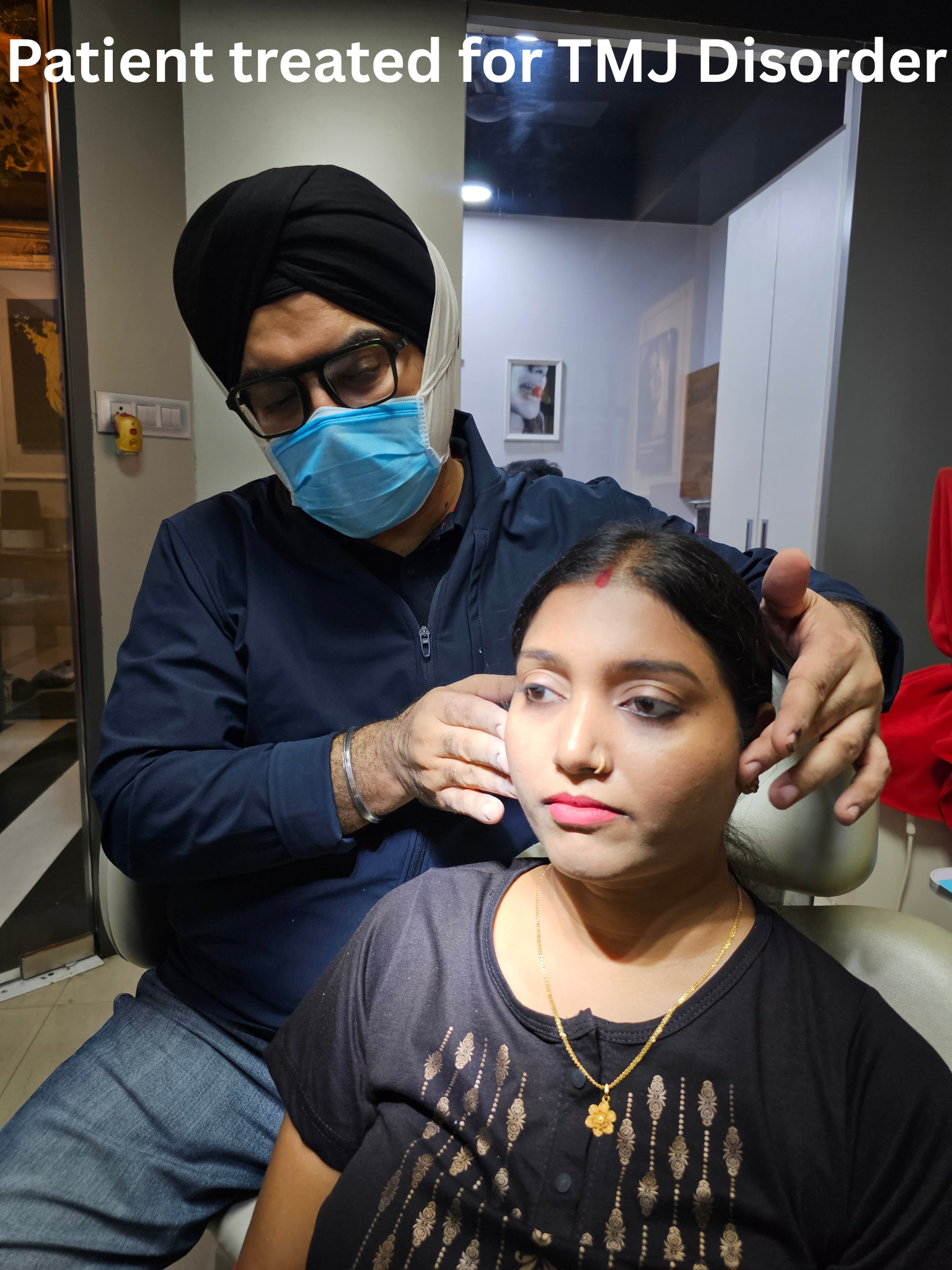
Schedule a consultation with Dr. Prabhjeet Singh Sethi of Dontia Care Clinic-Dental, the best TMJ Specialist in Kolkata, to determine whether TMJ dysfunction is contributing to your headaches.
TMJ Headache FAQs
How Long Do TMJ Headaches Last?
It can last a few days or even some months. The duration varies based on the causes of symptoms. TMD due to an injury may take longer to heal.
TMJ Headache vs Migraine
While jaw pain is located around the jaw area and in the temples, migraines are one-sided and strike any part of the head.
TMJ Headache vs Sinus Headache
While nasal discharge is associated with sinus headache, pain due to TMD doesn’t cause nasal discharge.
When Should You See a TMJ Dentist for TMJ Headaches?
When you have persistent jaw stiffness, experience chronic headaches, and your jaw makes popping sounds, you should see a dentist for headaches due to jaw joint dysfunction.
Where is a TMJ headache located?
You should know where a TMJ headache is located before any treatment. Common locations are the top of the head, forehead, and temples, among others.
What does a TMJ headache feel like?
A TMJ headache typically causes pain in the temples, forehead, jaw, and around the ears. The pain often worsens when chewing, talking, or clenching the jaw.
Can TMJ cause stuffy ears and headaches?
Yes, temporomandibular joint pain can cause stuffy ears and headaches. Some people with temporomandibular joint syndrome can experience pressure in one or both ears. Some may even notice ringing in the ears. On the other hand, some can even feel a deep, throbbing ache in the ear. Additionally, you can also experience headaches due to TMJ if you talk more and chew less soft foods.
TMJ headache after eating or exercise: Why does it happen?
Yes, you can experience jaw joint headache after eating. This happens because you put increasingly more stress on the jaw joint and its surrounding muscles by chewing hard and sticky foods.
Exercises are good for your TMJ health, but improper workout form can reverse the impact by straining jaw and neck muscles during sit-ups.
Conclusion
Recap of TMJ headache causes, symptoms, and treatments.
Wrapping up, temporomandibular joint headache may have various contributing causes, including stress, jaw injury, and fibromyalgia.
The list of symptoms may include pain while chewing hard food, ringing in the ears, dizziness, and sensitive teeth, among others.
Good news: temporomandibular joint dysfunction is treatable in many ways. You can start with simple home remedies like reducing the intake of hard foods for your jaw joints. Applying warm and cold compresses can also help. Deep breathing and stress management techniques can reduce the frequency of headaches. If nothing works for you, don’t worry, as there are plenty of treatment options available. This includes Botox injections, medications, and therapies like TENS. You can also try some alternative therapies if needed. This includes yoga, bite therapy, and massage.
Encouragement to seek professional help for persistent TMJ headaches
If you experience persistent jaw pain and if home remedies don’t work for you, you should immediately seek expert consultation. Specifically, if you find that your jaw pain doesn’t improve, if you hear a clicking sound while opening your mouth, or if your facial pain increases while chewing hard foods, it's time to immediately contact an expert in this field. You shouldn’t leave this untreated; you might experience chronic pain and misalignment of the jaw.